Miva Open University Matriculates 12,260 Students, Harps On Discipline, Hard Work
By Sunday Etuka


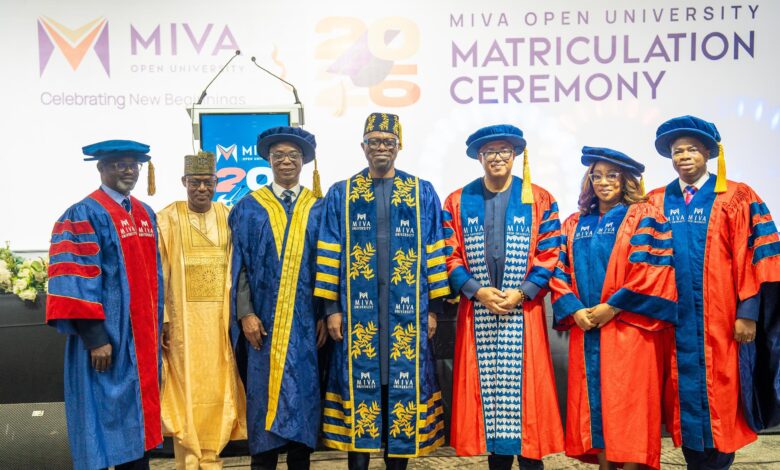
The Miva Open University has matriculated 12,260 students at a ceremony held on Saturday in Abuja, drawing new students from Nigeria and countries across the world.
The incoming class comes from 26 states of the federation and more than eight countries.
The university’s Vice Chancellor, Prof. Tayo Arulogun, said the diversity of the class reflects the open, borderless institution the university is building.
“Matriculation is far more than a formality,” Arulogun said. He told the students that taking the matriculation oath makes them full members of the university, with both privileges and responsibilities, including honesty in their work and respect for the rules that protect the integrity of their degrees.
He urged students to manage their own learning. “Freedom demands discipline,” he said, adding that no lecturer would knock on their doors to remind them of deadlines.
He also asked them to use technology, including artificial intelligence, “responsibly as a tool to deepen your understanding,” and warned that examination malpractice and plagiarism have no place at the university.
Founder and Chancellor, Sim Shagaya said the university was built on the belief that old methods of education can no longer serve the continent.
“It starts with one assumption, that the way we did things cannot be the way we continue to do things,” he said.
Shagaya said the founding team asked itself a single question: “Why should a brilliant mind be locked out of quality education?”
He said too many Africans with ability and hunger have been held back by systems that have not kept pace with a changing world.
He said the university has grown quickly. “Since 2023, more than 40,000 students have enrolled,” he said. “Miva is no longer a pilot, it is a university.”
He told the students the journey would not be easy, predicting that around the sixth week of the first semester the excitement of matriculation would fade.
“The work will be demanding,” he said. “The internet will fail at exactly the wrong moments.”
He said the university had promised students rigour, support through lecturers, learning centres and an AI learning companion, and a path to work.
Shagaya recounted handing his MBA degree to his father, a military man, 23 years ago. “If you do not work hard, if you are not disciplined, if you do not push yourself, the man who is barefoot will pass you on the road,” he recalled his father saying.
He also shared the story of Winifred Angola, who spent seven years trying to finish her education at a state university before stepping away to raise her children for a decade.
She later enrolled at Miva and completed her degree in three and a half years.
Looking ahead, Shagaya said the university plans a study centre in every local government area, robotics and drone laboratories, and a world class research institution.
“Our ambition is to impact one million Africans over the next decade,” he said. “It’s not just a slogan, it’s a commitment.”
“Africa will not be built by spectators,” he said. He closed by urging the students: “Now, go and build what is on the other side.”
Pro Chancellor Tunji Olowolafe, who said his own matriculation was 48 years ago, described the university’s model as the future of higher education.
He said higher education once demanded that people put their lives on hold, which shut out millions of women and cost the nation immense talent.
“Here, you do not have to choose between your life and your growth,” he said. “You can build a business, you can raise a family, care for aging parents, or hold a job while earning your degree.”
Olowolafe set three challenges for the new students: approach their studies with the same professionalism as their jobs, bring real world experience into every discussion, and finish what they have started.
“The hard part of online learning is not starting,” he said. “It is staying the course where life really exists.”
He also announced a scholarship established with his foundation and the university, designed so that academic ability, not financial circumstances, determines who gets to learn.
The ceremony also featured a keynote address from the Executive Director of the World Health Organisation’s Health Emergencies Programme, a Nigerian who previously led the Nigeria Centre for Disease Control.
Arulogun said his career shows that a Nigerian education combined with discipline, curiosity and service can open doors anywhere in the world.
Arulogun thanked parents, guardians, spouses, employers and sponsors, saying their sacrifices make the new students’ journeys possible.