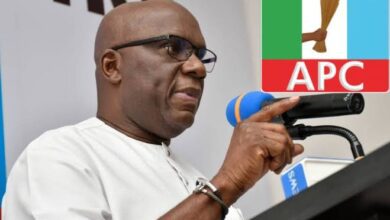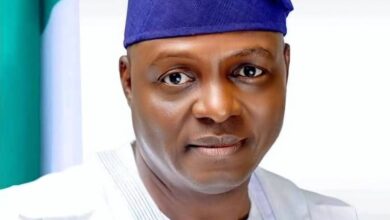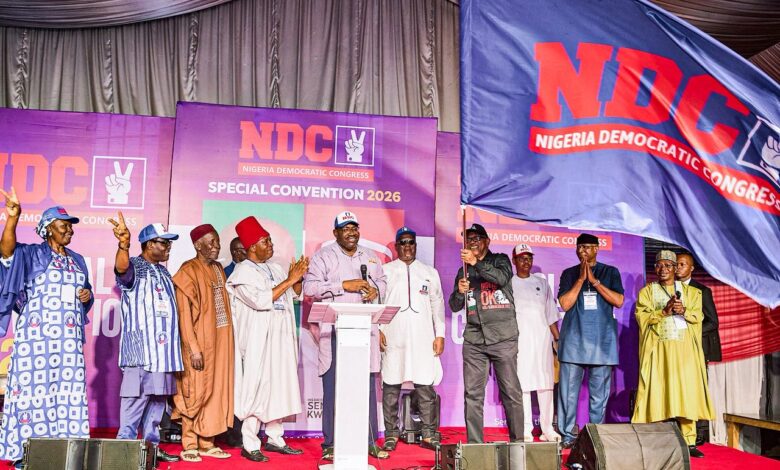


Former Anambra State Governor and newly emerged Presidential Candidate of the Nigeria Democratic Congress (NDC), Mr. Peter Obi, has outlined an ambitious governance agenda spanning security, healthcare, education, and food security, pledging a fundamental transformation of Nigeria if elected President.
SECURITY
On security, Obi promised to make the country safe for farmers to return to their farms, students to learn without fear, and investors to regain confidence in Nigeria.
“Our strategy would be intelligence-driven, technology-enhanced, proactive, and community-focused,” he said, adding that his administration would fortify security institutions, enhance operational coordination, and tackle the root causes of insecurity, which he identified as poverty, unemployment and marginalisation.”
HEALTHCARE
Obi painted a grim picture of Nigeria’s health sector, noting that the country currently ranks 157th globally and that only 10 to 20% of approximately 30,000 primary healthcare centres are operational.
He also pointed to one of the world’s highest infant mortality rates and a health insurance coverage rate of just 10%, contrasting it sharply with Indonesia’s coverage of over 90%.
He pledged to more than double the health insurance coverage to over 20% in four years, raise the healthcare budget from below 5% of GDP to a minimum of 10%, and ensure that at least 50% of the country’s 30,000 primary healthcare centres are fully functional and properly staffed by the end of his term. He also committed to ensuring a functional primary healthcare centre in all 8,809 wards across the country.
EDUCATION
Obi described education as the cornerstone of national revival, arguing that no country can grow beyond the quality of its educational system.
He promised heavy investments in schools, teachers, technology, and vocational training, with the goal of equipping Nigerian youth not only to seek employment but to create it.
We must pivot Nigeria from a cycle of shared poverty to one of collective prosperity through knowledge, innovation, and productivity,” he said.
HUNGER AND AGRICULTURE
On food security, Obi cited troubling data, saying that Nigeria ranked 109 out of 150 nations on the Global Hunger Index since the current government took office in 2023, and had since further plunged to 115th by 2025,
He noted that the Work Food Programme estimates more than 35 million Nigerians would face acute hunger and food insecurity this year.
To drive home the scale of the nation’s agricultural underperformance, Obi drew comparisons with leading rice producing nations like India, Bangladesh, and Vietnam.
“Rice remains the most consumed food in Nigeria. To illustrate our level of unproductivity, let us compare our capabilities with those of leading rice-producing nations. India is the largest producer of rice, yielding approximately 200 million tonnes of unmilled rice.
“Bangladesh is the third largest producer, producing around 60 million tonnes of unskilled rice, while Vietnam is the 5th producing about 42 million tonnes. Let us consider the land-to-population ratios:
“India has a landmass of 3,287,263 square kilometres. Distributed across its population of 1.4 billion people, this equals roughly 2. 34 Square meters per person.
“Bangladesh, with a landmass of around 148,460 square kilometres and a population of 170 million, has less than 1 square metres per person.
“Vietnam’s landmass covers 331,000 square kilometres. Divided by a population of 102 million, it yields about 3.25 square metres per person,” Obi said.