



The Group Chief Executive Officer of the Nigerian National Petroleum Company Limited (NNPC Ltd), Engr Bayo Ojulari, has explained that the company abandoned the quick fix approach to refinery rehabilitation because it paid contractors without tying their rewards to performance, a leakage he said was stopped in 2024.
Ojulari spoke on Tuesday in Abuja at a media parley on the company’s 2025 audited financial statement.
He said the new approach is a technical equity partnership, under which competent operators with a record of running refineries and petrochemical plants take equity and share the risk, which he said will ensure sustainability.
According to him, potential partners deployed more than 33 top engineers for three months at no cost to NNPC Ltd as part of ongoing studies. He added that lessons from visits, including to China, show that plants can run above nameplate capacity through optimisation and technology.
On the proposed Initial Public Offer, Ojulari said there is no fixed date yet, as work continues on readiness.
He clarified that the planned listing covers the entire company and not only the refineries, and that it will depend on shareholders and market conditions once readiness diagnostics are complete.
Meanwhile, the GCEO said that the NNPC Ltd grew its Profit After Tax (PAT) by 33 percent to N7.2 trillion in 2025, up from N5.4 trillion the year before.
He said the company is working to build a globally competitive organisation modelled after Saudi Aramco.
Revenue for the year stood at N34.5 trillion, lower than in the previous year because of falling crude oil prices and reduced white product volumes following market regulation.
Earnings per share came in at N35.9, while taxes, royalties and other remittances to the government rose 39 percent to N22.3 trillion.
He attributed the stronger bottom line to efficiency, cost discipline and waste reduction.
General and administrative expenses were cut by a quarter, the cost of sales was kept stable, and long-standing receivables were recovered.
He added that the company now reviews receivables monthly, stressing that those who take crude and gas must pay.
Crude oil and condensate production hit a five-year peak of 1.77 million barrels per day, while gas supply reached a three year high of 7.2 billion standard cubic feet per day.
Looking ahead, the company has set targets of two million barrels of crude oil per day by 2027 and three million by 2030.
Gas production is projected at 10 billion cubic feet by 2027 and 12 billion by 2030, backed by over $60 billions of investment across the energy value chain.
Ojulari said activities such as the signing of Bonga North are part of efforts to reach these goals, and that the resources and people are available, but technology and financing must be brought in.
On gas infrastructure, he said welding on the main line of the Ajaokuta Kaduna Kano pipeline is complete, with tie ins to the respective locations under way.
He also said the OB3 gas pipeline, which faced challenges for several years, was completed this year, connecting sources of gas to markets and supporting industrialisation.
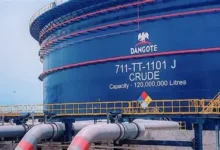
Ojulari said NNPC Ltd still delivers crude to Dangote Refinery in naira under the approved government arrangement, and also supplies in dollars because its own obligations, such as rigs and joint venture cash calls, are settled in dollars.
He said the Petroleum Industry Act has fundamentally strengthened the company’s commercial base and positioned it to operate without reliance on federal budgetary allocation.
On staffing, he said more than 1,000 newly employed professionals completed a one-year internship and training programme and have been deployed across the company. Women hold more than 23 percent of leadership positions, against a global industry average of 17 percent.
Ojulari said community-based surveillance combined with security agencies has lifted availability on major pipelines from below 10 percent in 2023 to near 100 percent, with reconciliation factors now in the 90s.
He said attention is now on smaller lines and wellheads where intrusions persist, with wellhead cages and fibre optic intrusion detection being deployed to improve discovery and response.