


The Global System for Mobile Communications Association (GSMA) has warned that millions of Africans risk being left behind in the artificial intelligence (AI) revolution despite widespread mobile broadband coverage, citing the high cost of smartphones and internet access as major barriers to digital inclusion.

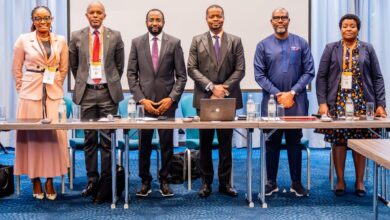
The warning came on Wednesday as the GSMA and the African Telecommunication Union (ATU) unveiled a partnership aimed at driving policy reforms to accelerate investment, improve connectivity and unlock greater value from Africa’s telecommunications sector.
Speaking at the event, GSMA Senior Director of Public Policy and Communication, Caroline Mbugwa, said Africa was entering the era of intelligence, where digital infrastructure would determine the continent’s readiness for AI.
She disclosed that while about 961 million Africans live within the coverage of mobile broadband networks, many remain unable to use the services because of affordability challenges, creating what GSMA describes as the “usage gap.”
“If this challenge remains unresolved, millions of Africans risk being excluded from AI adoption and the opportunities that come with digital transformation,” she said.
Mbugwa called on African governments to introduce fiscal reforms, including reducing taxes on entry-level smartphones, to make digital devices more affordable and expand internet access.
She noted that South Africa’s decision to remove a nine per cent luxury goods tax on entry-level smartphones had accelerated smartphone adoption, urging other countries to adopt similar measures.
She also observed that extending broadband infrastructure to rural and underserved communities costs between two and five times more than deployment in urban areas while generating significantly lower returns for operators.
According to her, regulators should adopt technology-neutral policies that would allow operators to deploy the most appropriate technologies, including satellite services, to bridge connectivity gaps.
“The Digital Africa Index provides regulators with practical evidence on where reforms are needed. Policy decisions should be data-driven if Africa is to achieve meaningful digital transformation,” she added.
Mbugwa further disclosed that GSMA would soon launch its AI Atlas initiative, designed to integrate African languages into large language models to make artificial intelligence more inclusive.
She revealed that Nigeria is among the participating countries, with four Nigerian languages already incorporated into the initiative.
Also speaking, ATU Secretary-General, John Omo, said the telecommunications sector already contributes about $240 billion annually to Africa’s economy, supports 13 million jobs and generates $45 billion in government revenues.
He urged governments and regulators to leverage findings from the GSMA Mobile Economy Africa Report to formulate policies that would attract more investment and unlock the sector’s full economic potential.
Earlier, GSMA Head of Policy and Regulation, Michaela Angonius, advocated modern, technology-neutral licensing regimes and investment-friendly regulations, arguing that such reforms would accelerate broadband expansion, encourage innovation and strengthen digital inclusion across the continent.