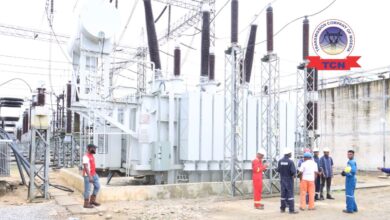


The Transmission Company of Nigeria (TCN) has pushed back against claims that a weak national grid was wasting thousands of megawatts of electricity, arguing that regulatory data actually points to failures on the generation side of the industry rather than in transmission.

In a statement issued by its management on Thursday, TCN responded to a report by ThisDay on July 28, 2026, in which the Association of Power Generation Companies (APGC) stated that Nigeria’s power shortages stem from an unreliable grid rather than a shortfall in generation.
APGC had said the country’s installed capacity over 15,500MW was being constrained by a network capable of wheeling only around 4,500MW.
TCN said the Nigerian Electricity Regulatory Commission’s (NERC) first quarter report, covering the same period, tells a different story.
According to the transmission company, the 4,500MW figure cited by APGC actually reflects the average capacity GenCos themselves declared available for dispatch, not a ceiling imposed by the grid. The report also puts total installed capacity at 13,625MW, nearly 1,900MW below APGC’s figure.
TCN further stated that its verified transmission capacity now stands at 8,700MW, pointing to a new daily peak of 5,801.84MW carried by the grid in March 2025 as evidence the network can handle far more power than critics suggest.
The company also cited continued infrastructure investment, including 82 new transformers installed since January 2024 and the recent commissioning of new 330kV lines serving the Benin corridor.
On the question of why so much capacity goes unused, TCN pointed to the NERC’s report plant availability figures, which show that just 32.27% of installed capacity was available for dispatch across the first quarter, with several individual plants recording availability rates below 10%.
The company said this aligns with an admission from APGC’s own Chief Executive, quoted in the original ThisDay report, that gas supply to thermal plants had fallen below 43% of daily requirements.
TCN also disputed the characterisation of a 27 January grid collapse as a transmission failure, saying NERC traced the incident to inadequate reactive power support on the generation side.
The company acknowledged that a separate collapse in January was linked to a fault on the Transmission Service Provider substation, but said that incident was ultimately traced to a generation company’s protective equipment.
On unpaid capacity charges, argued that a large share of the shortfall reflects billing and collection failures among electricity Distribution Companies (DisCos) rather than any inability of the grid to deliver power, citing NERC’s finding of a significant gap between the commission’s collection targets and what DisCos actually remitted.
The Company said it does not dispute that Nigeria’s power sector remains under strain or that transmission infrastructure requires ongoing investment, including in response to vandalism. But it urged industry commentators, including APGC, to base public claims about the sector’s problems on the regulator’s published data.